 While attending a Plan Sponsor University (TPSU) program at Butler University recently, the issue of how to escalate contributions for lower income wage earners was a recurring theme. Specifically, sponsors reported that their biggest challenge was getting (especially lower-income) participants in the company 401(k) plan to increase (escalate) their contributions to the plan. Sponsors reported that the most common reason that participants do not contribute more to their retirement plan is lack of disposable income…they just cannot spare the money each month.
How Can You Manage Escalating Employee Contributions While Maintaining Take-Home Pay?
For many participants there is a simple solution that may have a profound outcome in the value of their defined contribution (DC) retirement plan, allowing them to increase monthly contributions and will not reduce the amount of take-home pay each month.
According to the Internal Revenue Service (IRS) the average tax refund is $3,120. That means the average taxpayer overpays their tax obligation to the US Government by $260 per month. Over-payment of taxes accrues to the government tax-free (no interest is paid to the taxpayer). It is essentially a tax-free loan to the US government.
Over the course of 30 years the amount lent to the government is approximately $93,600 based on the average over-payment above. Invested in a DC plan like a 401(k), earning a 6% return over the same period that money would accrue to $261,173.91, in addition to their existing contributions. And, the participant continues to take home the same amount each month.
A Powerful Strategy That Can Have a Profound Effect on Retirement Outcomes for Millions of Workers
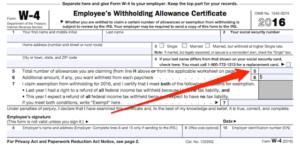
In order to have less tax withheld the employee will need to resubmit the IRS w-4 form and increase the amount of allowances on the form. The more allowances, the less taxes will be withheld and the more income will be available to contribute to the company retirement plan. Also, keeping in mind that more income deferred will result in a lower overall tax liability. This, after all is the very essence of why the 401(k) tax code was enacted, yet it is the most overlooked and underutilized.
However, since each employee has a unique tax profile, employees will need to calculate how many allowances to claim in order to avoid withholding too little which would result in a tax liability. The IRS provides a withholding calculator that allows taxpayers to determine the correct amount of allowances to claim and total tax liability.
With a little guidance and a clear plan, sponsors can deliver a simple, smart and powerful tax strategy that can provide an astounding retirement outcome from what is considered a liability.