
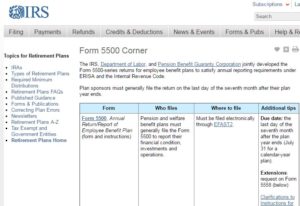
 The DOL, IRS and PBGC have proposed changes to the 5500 to be effective plan year 2019 which while dramatically increasing transparency about defined contribution plans like 401ks could lead to more audits by the IRS and DOL according to a Vanguard expert. While the improved transparency could lead to better designed plans that could benchmark against their peers, according to the ARA (American Retirement Association), it could lead to increased costs.
The new 5500 form, according to Vanguard, would:
- Increase transparency of fees and expenses by requiring a separate Schedule C (Service Provider Information) for each service provider to a plan. In addition, this schedule would be revised to more closely align with the service provider fees and expenses that must be disclosed to plan sponsors under ERISA section 408(b)(2).
- Enhance the ability to “mine” data from Form 5500 by, for example, requiring information previously accepted as an attachment to be entered directly into the form.
- Allow easier recognition of trends across DC plans by adding plan-level questions about, for example, Roth, education, advice, safe harbor, auto enrollment/auto escalation, and matching contribution features.
- Provide clearer understanding of daily operations of a plan by adding IRS and DOL compliance-related questions about issues including required minimum distributions, uncashed checks, hardship withdrawals, participant fee disclosure notices, and summary plan descriptions.
- Improve clarity around certain assets classes (e.g., alternative investments), plan expenses, and qualified accountant information, by revising Schedule H (Financial information).
According to the ARA which includes TPAs and advisors and is supported by service providers:
The new questions would require many system and technology-based enhancements to be developed and implemented by January 1, 2019, in order to be able to report out the data needed to respond as of the end of that plan year. Many of the proposed questions request detailed information that is presently not tracked by third party administrators and recordkeepers.
As a result, the ARA is requesting more time to comment and to implement the proposed changes.
Nothing is final so be sure to check with your plan advisor and service provider who should be tracking the proposal closely.


